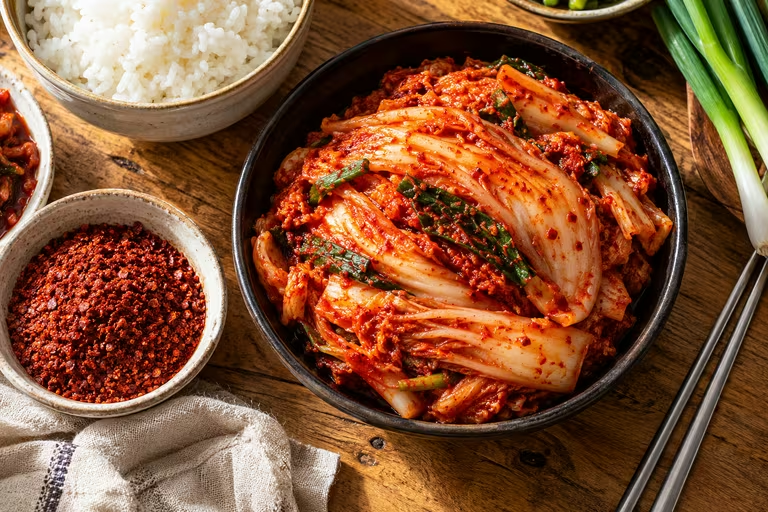
Choose gochugaru by the food you want to cook, then choose a pack you will use comfortably. Coarse flakes leave a visible pepper texture in a cucumber salad or seasoning mixture. A fine grind blends more evenly through a smooth sauce. Both belong in a Korean pantry, but they do different jobs at the stove.
The Taekyung range offers a simple starting point: coarse red pepper in a 7 oz (200 g) bottle or a 1 lb (454 g) bag, and fine red pepper in a 1 lb (454 g) bag. The useful distinction is texture first, quantity second. A larger bag is not automatically the right choice, and a finer powder does not automatically mean more heat.
What is gochugaru?
Gochugaru is dried red pepper used throughout Korean cooking. In English, packaging and recipes may call it Korean red pepper, red pepper flakes or red pepper powder. Those names alone can leave the grind unclear. Look for the coarse or fine description and examine the product photograph before choosing.
In her gochugaru ingredient guide, Korean cook Maangchi distinguishes the flakes used in many everyday dishes from the fine powder often used for gochujang. She also notes that gochugaru comes in different heat levels. That is why the word “powder” on its own is not enough to tell you how a product will behave in a recipe.
For a first purchase, start with a dish already on your dinner plan. If it calls for Korean red pepper flakes, the coarse format is the more direct match. If it specifies finely ground gochugaru, choose fine. When the recipe provides a photograph or an ingredient note, use that detail instead of guessing from the color of the finished dish.
Coarse or fine: choose the texture your recipe needs
Coarse gochugaru for visible flakes
Coarse pepper keeps more of its flake texture. It is a practical choice when you want to see small pieces of pepper against sliced vegetables, a bowl of noodles or a seasoning mixture. The Taekyung coarse bottle and coarse bag offer this format in two quantities, so you can make the texture decision without committing to the larger pack.
Consider coarse flakes when the recipe names them, particularly for fresh vegetable side dishes and kimchi seasoning. For fermented kimchi, follow a complete, reliable recipe for the preparation and storage steps. Choosing the pepper grind is only one part of that process; this guide does not provide a fermentation method.
Fine gochugaru for a more even mixture
Fine pepper has smaller particles that distribute through a mixture with less obvious flaking. Choose the Taekyung fine bag when your recipe asks for fine gochugaru or when you prefer a less speckled sauce. Fine pepper still needs thorough mixing. It does not behave like a liquid coloring, and adding it does not guarantee a perfectly smooth result.
A useful example comes from Korean Bapsang’s soupy tteokbokki. The recipe favors finely ground gochugaru for its broth and explains why pepper flakes and gochujang produce different results. That is a concrete reason to choose a finer grind, beyond how the powder looks in its package.
Grind and heat are separate choices
“Coarse” and “fine” describe particle size. They are not a reliable heat scale. Do not use the fine bag as an automatic way to make a dish hotter, or assume the coarse bottle will make it mild. Follow the heat description on the product and the amount in your chosen recipe.
For a flexible dish such as a freshly mixed dressing, begin conservatively and taste before adding more. For a recipe with several spicy ingredients, consider them together: pepper powder, chili paste and a hot sauce all contribute. Writing down the amount you liked makes the next batch easier to repeat.
How gochugaru differs from other red seasonings
Gochugaru and gochujang
Gochugaru is a dried pepper ingredient. Gochujang is a fermented chili paste with a broader flavor and a different texture. Maangchi’s gochujang guide describes the paste as a source of heat, color and sweetness. A spoonful of paste therefore brings more to a dish than pepper alone.
They are useful pantry companions, but a spoon-for-spoon swap can change the result. Replacing flakes with paste changes the thickness of a sauce and may change its sweetness and saltiness, depending on the paste. Replacing paste with dry pepper removes those other contributions. If you want to use what you already have, find a recipe designed around that ingredient rather than expecting the two to behave identically.
Gochugaru and cayenne
Cayenne is also a dried pepper seasoning, often sold finely ground. McCormick’s red pepper guide describes ground cayenne as a source of intense chili heat. That makes it a different starting point from simply selecting coarse or fine gochugaru for a Korean recipe.
If a recipe asks for a generous quantity of gochugaru, do not replace that whole quantity with cayenne without an adjustment from the recipe author. Matching the red color does not ensure a matching heat level or flavor. For a dish you intend to cook often, buying the specified pepper is usually simpler than repeatedly correcting a substitute.
Gochugaru and paprika
Paprika also comes in several styles, so read its full name. Sweet paprika and smoked paprika are distinct choices. For example, McCormick describes its culinary paprika as mild and slightly sweet. A product with that profile cannot be assumed to deliver the same heat as a chili seasoning.
Use the paprika your recipe requests when its flavor is part of the dish. If you are improvising, treat a paprika substitution as a deliberate change rather than an exact replacement for gochugaru. Check whether the paprika is sweet, hot or smoked before adding it, and keep the rest of the seasoning flexible.
Put the pepper to work in everyday meals
Start with a cucumber side dish
A fresh cucumber salad gives you an easy way to understand how flakes look and feel in a finished dish. Korean Bapsang’s oi muchim recipe combines cucumber with gochugaru and a seasoned dressing. It also explains how salting and draining the cucumber can limit excess water.
Use the full recipe for its proportions and method. Pay attention to the cucumber preparation as well as the pepper: a dressing that tastes balanced in the mixing bowl can seem weaker when diluted by vegetable moisture. Coarse Taekyung flakes are the format to consider when your recipe calls for visible Korean red pepper flakes.
Choose a soup or rice cake recipe by its sauce
A bowl with a loose broth needs a different seasoning approach from rice cakes coated in a thick paste-based sauce. Read the ingredient list before shopping. The soupy tteokbokki recipe linked above uses gochugaru, while other versions use gochujang. Let the specific recipe determine which ingredient belongs in your basket.
When cooking from a new recipe, keep the first batch close to the author’s instructions. Once you understand the finished consistency, you can decide whether a coarser appearance or a smoother pepper distribution suits your preference. Changing the grind, the paste and the amount of liquid at once makes it harder to understand what caused the difference.
Add variety to familiar food
You do not need a special occasion to use Korean red pepper. A small amount can bring pepper flavor to a noodle dressing, a vegetable seasoning or a sauce served alongside a rice bowl. Choose one place for the pepper to go rather than adding it to every component of the meal.
For example, keep the rice simple while seasoning the vegetables, or serve a pepper dressing separately so everyone can adjust their own bowl. These are flexible serving ideas, not fixed recipes. Use the quantities and cooking instructions from a recipe you trust when you want a repeatable result.
Choose the Taekyung pack that fits your kitchen
Coarse bottle: 7 oz / 200 g
The smaller coarse format is a straightforward place to begin if Korean cooking is an occasional part of your week. It gives you flakes for recipes that call for them without buying a full pound. It also makes sense when you want to establish which dishes you enjoy before committing more pantry space.
Think about how often you reach for pepper, rather than how ambitious your recipe list looks. If you usually cook one new dish at a time, the 200 g bottle may fit that pace. Check the label and closure when it arrives, and keep its storage instructions available.
Coarse bag: 1 lb / 454 g
The larger coarse pack suits a kitchen where flakes already have a regular role. You might make vegetable side dishes often, cook for more people or follow recipes that use larger quantities. The bag contains more than twice the stated weight of the 200 g bottle, so make sure that extra quantity has a purpose.
Choose it because the format and amount match your cooking habits. Pack size alone does not establish better value; compare current quantities and prices when purchasing. If you transfer some pepper into another container, keep the original label and mark the contents clearly.
Fine bag: 1 lb / 454 g
Choose the fine bag when fine gochugaru is the ingredient you actually need. Its role is different from stocking up on coarse flakes. It is useful for cooks who repeatedly make recipes calling for fine pepper or prefer the way a smaller particle mixes into their seasoning.
There is no need to buy both grinds before you begin. Start with the one your next few recipes require. Add the second when it solves a specific cooking need, such as moving from flaked vegetable dressings to a recipe that explicitly requests finely ground pepper.
Store gochugaru with the label in view
Follow the storage directions and date printed on your Taekyung package. Keep the closure secure and use a clean, dry spoon. Set aside the amount you need before working over a steaming pot so the main container stays away from moisture and cooking splashes.
For longer storage, Maangchi recommends keeping gochugaru airtight in the freezer and a smaller working quantity in the refrigerator. Treat that as a general cook’s storage approach, alongside the directions on your own package. It is not a Taekyung shelf-life promise or a reason to ignore the printed date.
If you divide a large bag, label the smaller containers with the product name, grind and original date information. Keep coarse and fine pepper distinguishable at a glance. Avoid topping up an unlabeled jar repeatedly, because it becomes difficult to know which pepper is inside or which package instructions apply.
A quick check before choosing
- Read the recipe for the ingredient and grind. Gochugaru, gochujang and cayenne are different shopping choices.
- Choose coarse for a flake texture or fine when the recipe needs a finer distribution.
- Select 200 g or 454 g according to how regularly you cook with that format.
- Check the current product label for ingredients, origin and storage information.
- Keep the package details when transferring pepper to another container.
For your next meal, choose one recipe and the Taekyung format it calls for. A cucumber side dish, a bowl of seasoned noodles or a carefully chosen rice cake recipe gives the pepper a clear job and makes the next pantry decision easier.
Find your Taekyung pantry staple.
Compare the 7 oz coarse bottle, 1 lb coarse bag and 1 lb fine powder.
Explore the collection →